Real-time 3D exercise figures for fitness apps on iOS, Android and the web.
Drag to rotate
A figure you can hold.
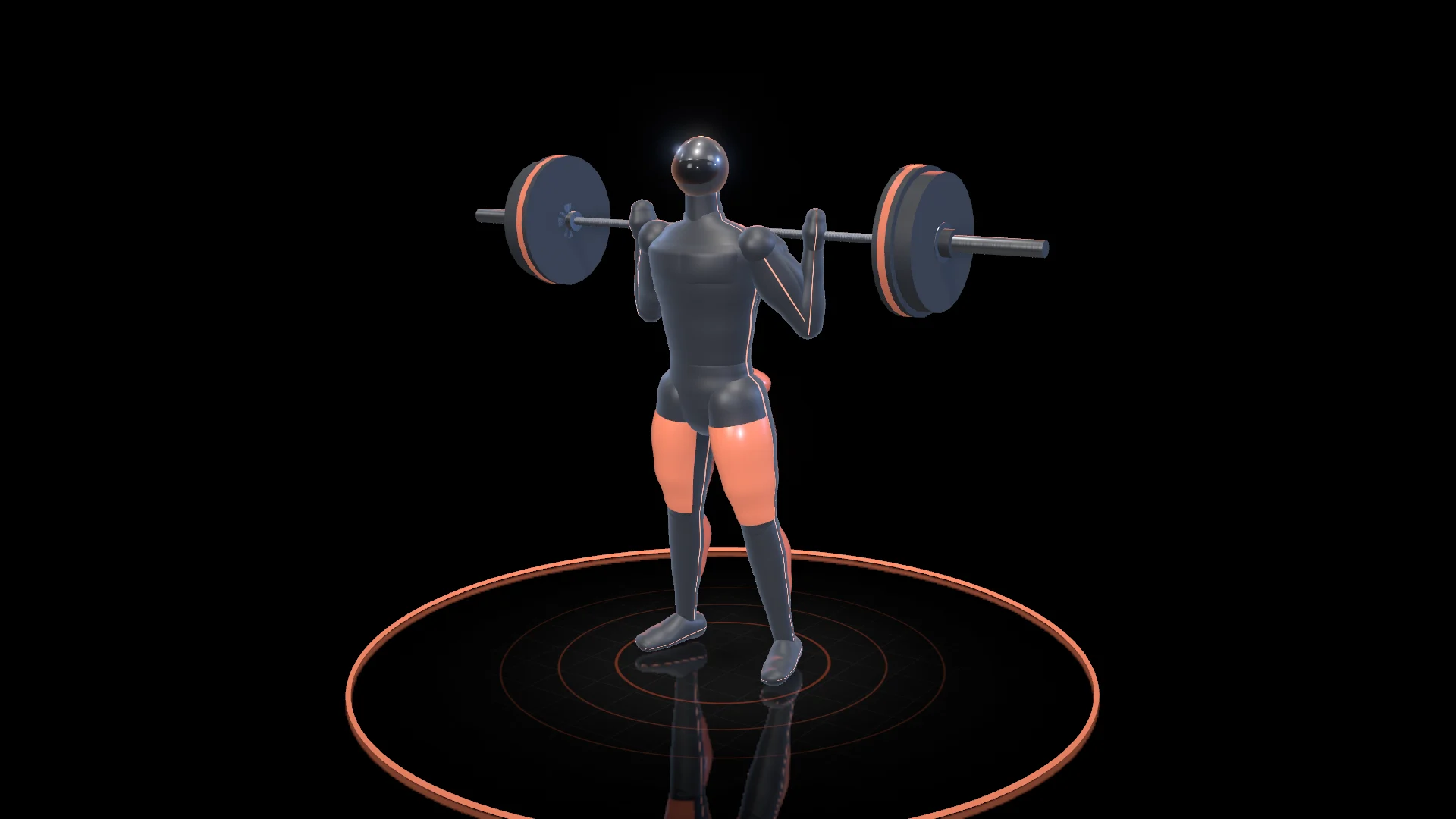
A video plays one take from one angle. A live figure turns in your hand, pauses at any point in the rep, shows which muscles are working and takes on your app's appearance.
Preparing the figure
Movement
Seated Side Lateral Raise
Working
Body
Studio
In the product
Running in a real workout app.
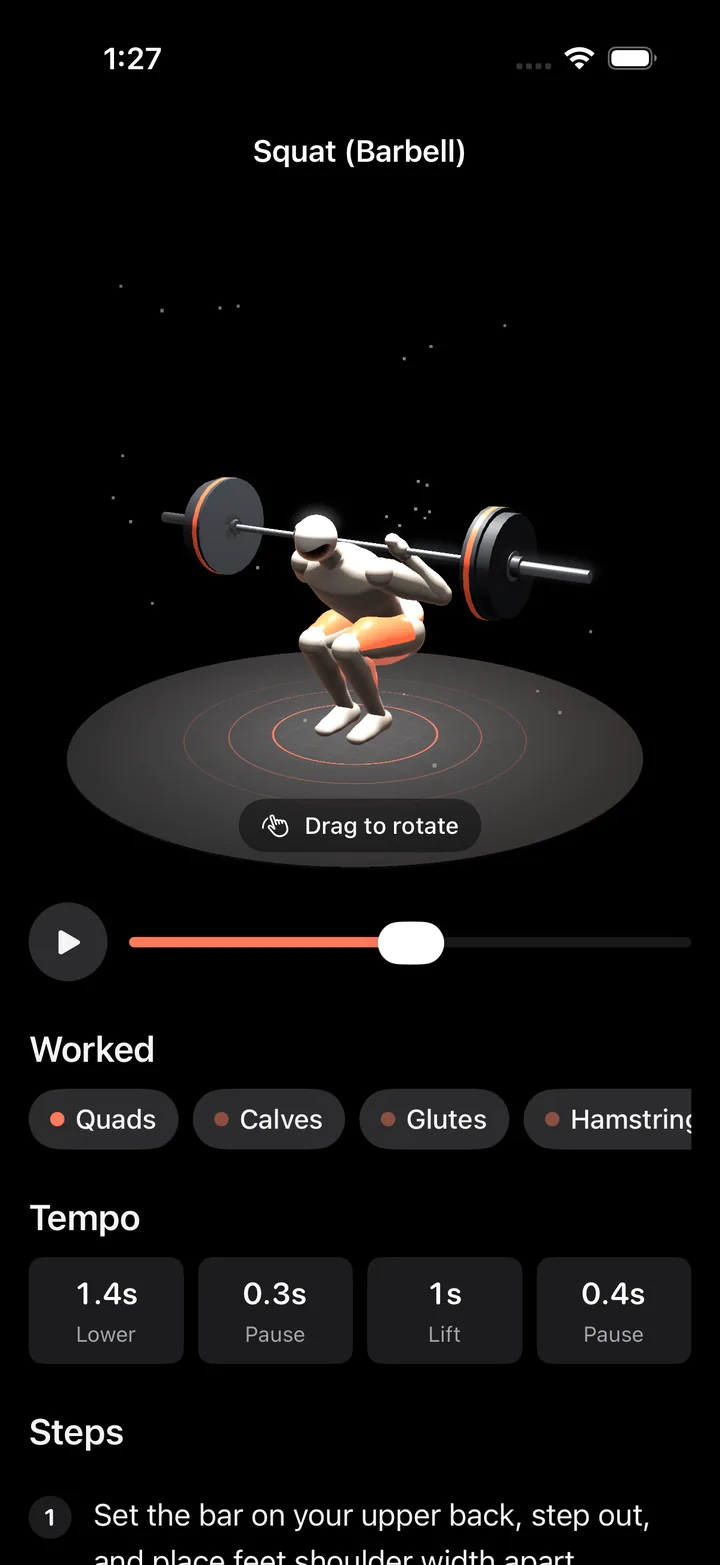
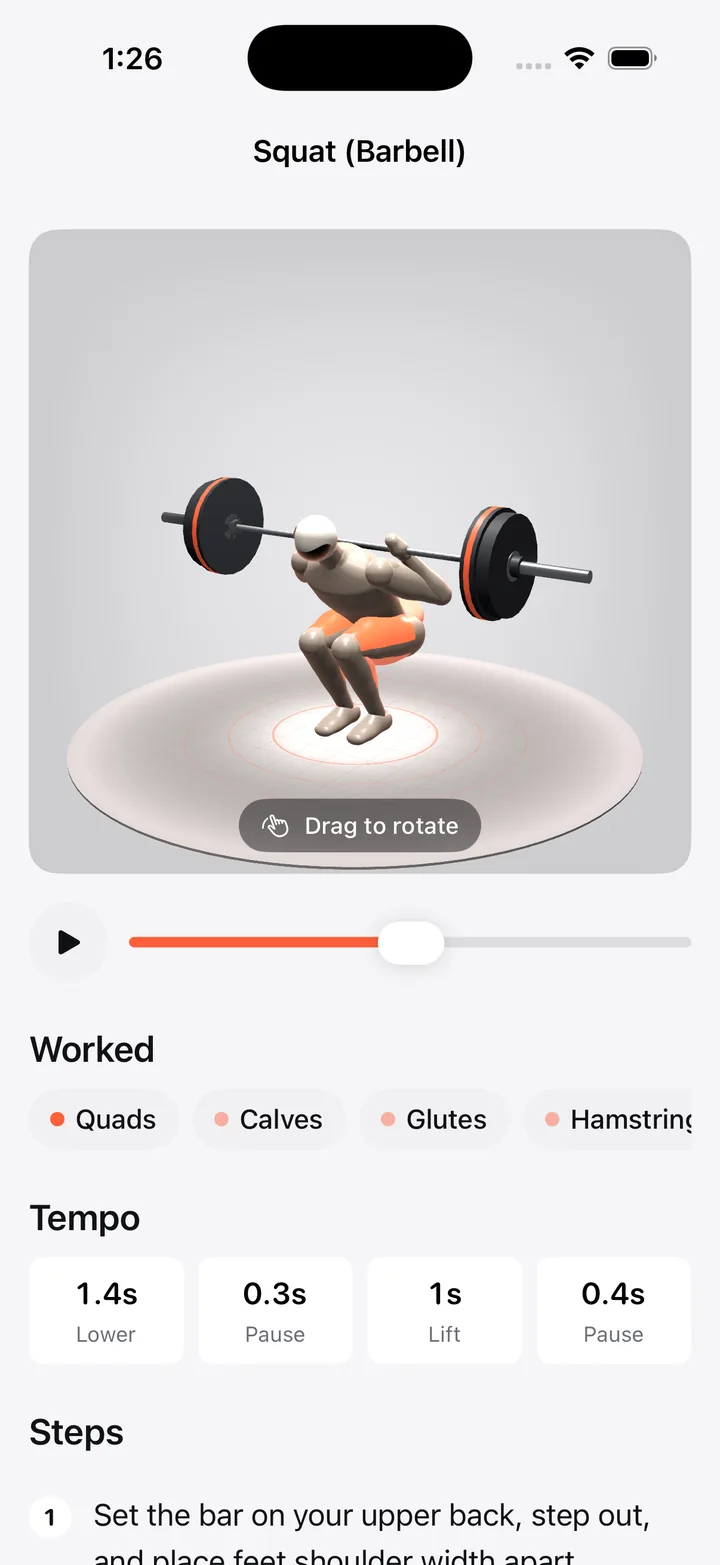
Setwise is our own workout app, and Repglyph started there. Every exercise opens on a live figure with its working muscles and a rep scrubber, drawn in the app's own colours and reading the same rig file as this page.
Catalogue exercises mapped
448
System settings followed
Dark mode, Reduce Motion
Setwise, iOS Simulator captures
Under the surface.
One movement definition, three native renderers, a compact rig file and a documented validation process.
Renderers
Native on every platform.
Each platform draws the figure with its own renderer from the same rig file, with the same lighting, framing and interaction, so a squat looks the same everywhere you ship.
iOS
SwiftUI view, SceneKit
Android
Jetpack Compose, Filament
Web
TypeScript, three.js, rendered in a worker
Rig data
The whole library in 0.5 MB.
Every movement, body and prop ships in one compressed file with your app, so figures render on the device with no network calls. On the web a page can load one movement at a time, about 15 KB each.
Validation
Motion should be accurate, not just beautiful.
Poses are validated against cited professional and clinical standards. Automated checks measure every pose against documented, cited thresholds. They are not a clinical assessment, and independent clinician review of the report is pending.
Every figure has generated alt text. The viewer works from the keyboard and follows the reduced-motion setting on each platform. The target is 60 fps; so far it has been measured on the iOS Simulator, the Android emulator and desktop Chrome.
Build with Repglyph.
Repglyph is in early access. Terms for the commercial licences are set with each partner.
Licences
Licence
Includes
Terms
Open-source 2D core
Flat and monoline SVG figures and round thumbnails. Runs in Node, browsers and Workers. MIT code, CC0 movement data.
Free
Pro
The 3D renderers for iOS, Android and the web, the full movement library and every body, theming, offscreen thumbnails, and updates as they ship.
Licence per app
Enterprise
Custom movements, mapping to your own exercise IDs, your own suit and stage, a service agreement and direct support.
Custom terms
Early partner programme
We're working with a small group of fitness apps before general release. Partners get help with integration, a say in which movements come next, and catalogue mapping during onboarding. Tell us which platforms you ship on.